Cornus | Dogwood | Edgeworthia | Hamamelis | Helleborus | Iris | Prunus mume | Winter | Witchhazel
Chasing Winter Away
It’s Sunday afternoon and much of the South is bracing for yet another nasty swipe by Old Man Winter. He has already taken a couple of good whacks at us this season and it looks as though tonight’s snow and ice may extend as far south as Birmingham and perhaps even further! To help chase away those winter blues, I’ve been culling through my photo files and trying to reduce the number of unwanted, unneeded and unusable photos that I just haven’t gotten around to deleting yet. Going through file after file helped me realize just how many photos I have of plants that help me get through the cold, gray days of winter in my garden and I thought I’d share a few favorites with you.
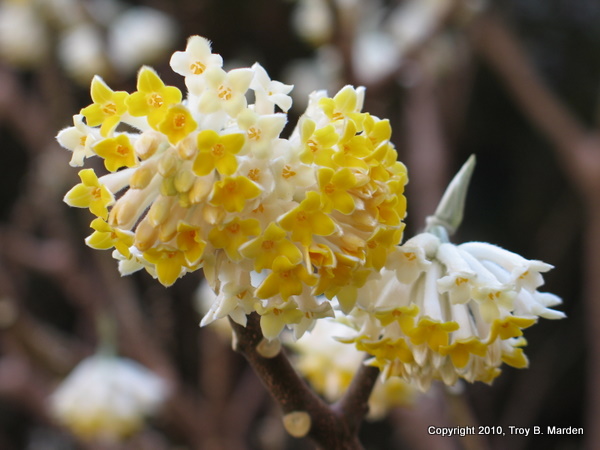
Edgeworthia chrysantha has long been one of my favorite winter-flowering shrubs. In middle Tennessee, we can expect flowers by mid-February, but the plant needs to be sited in a protected location so that cold weather doesn’t freeze the early blooms. In just the right location, you can expect a 4 to 5-foot tall shrub with a 5 to 6-foot spread, but they often don’t get quite that large. A particularly cold winter may cause some stems to die back, but with careful pruning and shaping the plant will rebound quickly. Morning sun with afternoon shade is the ideal location, preferably in rich, humusy, evenly moist soil with some protection from bitter winter winds.
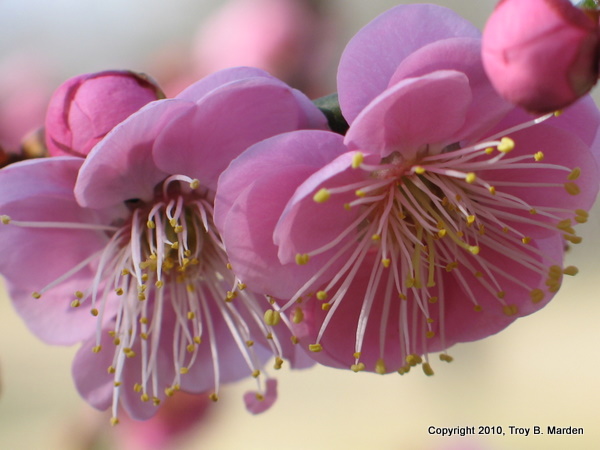
The most serious of my plant collecting friends are really into this stunning relative of some of our most important commercial fruit crops–peaches, plums and cherries. Prunus mume is a species of flowering apricot whose blooms appear in the dead of winter when planted in just the right climate. In my garden, they frequently get frozen, but I don’t mind. The few days of incredible enjoyment they give me each year, sometimes as early as the end of January, make them worth whatever space they take up in the garden. It helps that they are intoxicatingly fragrant!
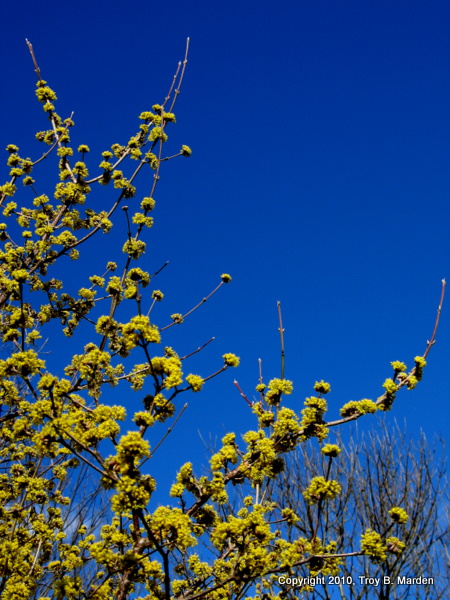
Cornus officinalis is one of our earliest flowering dogwoods. Dogwood? Sure enough! As early as February in a warm winter the golden yellow blooms burst open to brighten even the grayest days of winter. Imagine the flower of the white flowering dogwood (Cornus florida) that most of us are familiar with and then think of that little green “puff” in the center of the bloom. That “puff” is the little cluster of true flowers that are surrounded by the showy white bracts that we think of as being the flower, but the truth is, it’s not. Just like the Christmas poinsettia, the showy parts are actually bracts and not flowers at all. In the case of Cornus officinalis, it’s missing those showy bracts and it just has the little “puff”–and they happen to be brilliant, golden yellow! A most welcome sight as winter begins to lose its grip and spring slowly emerges.

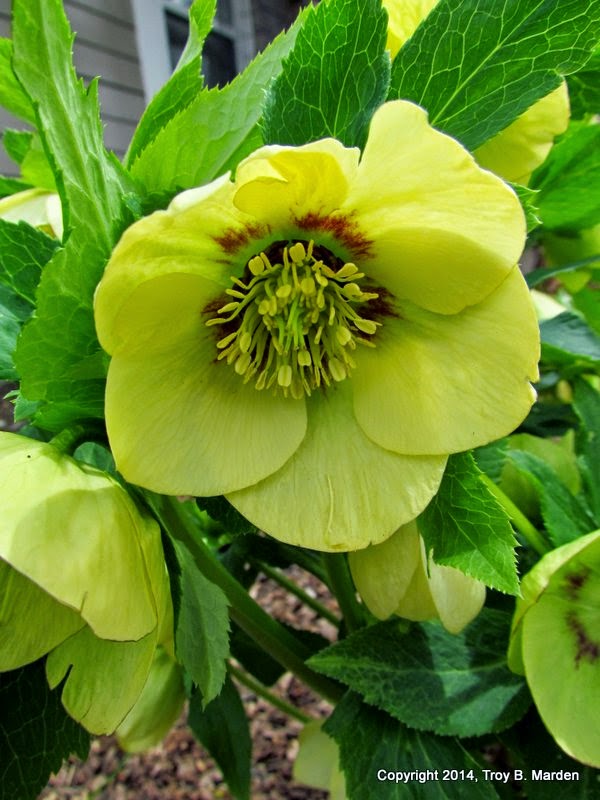
Late winter and early spring in my garden are defined by the flowering of the hellebores, or Lenten roses. Known as the stinking hellebore (an absolutely horrendous common name, as there is nothing about it that stinks!), Helleborus foetidus is one of the earliest flowering of all the plants in my garden. In fact, it’s not uncommon for buds to begin appearing at the top of the plant as early (or late, depending on your perspective) as Thanksgiving! Those buds will go through a tremendous amount of cold to begin opening their pale green petals the very minute the weather acts as though it is going to moderate! Helleborus foetidus is almost always in full bloom by mid-February and will bloom for a full three months!

Also beginning in February, the witchhazels take center stage in the late winter and early spring garden. Hamamelis x intermedia ‘Arnold Promise’ is a little later, but is also one of the showiest of all of the witchhazels. Usually in flower around the first week of March, it lights up the garden for about two weeks in early spring and again in fall, when its leaves turn golden yellow with touches of orange and red!

In years when we’re lucky (I guess) enough to have a little snow on the ground in late February, the beautiful and diminutive Iris reticulata will actually push its blooms right up through the snow! Growing from a small, underground bulb, you need to plant these in the autumn–at the same time you would be planting tulips and daffodils. Perfect perennials, Iris reticulata likes a location in the garden where it can spend the summer hot and dry. Given the proper conditions it will multiply rapidly and return year after year, putting on a bigger and better show each and every spring.
I noticed yesterday when I was getting out of the car that the ‘February Gold’ Narcissus that are planted next to the driveway are up about 2″ and are already showing the tips of their flower buds! ‘February Gold’ is one of the earliest of all daffodils and with the reflected heat of the driveway, they are almost always in full bloom by the third week of February! Spring can’t be far off now!